
Industry News
SkyDefense Announces Mass Production Timeline for CobraJet Counter-UAS: Testing in Q4 2026, Production Launch in Q1 2027.
The multi-scenario application of 3D printing in the defense industry will serve as a strong signal that additive manufacturing is replacing traditional manufacturing.
News Content
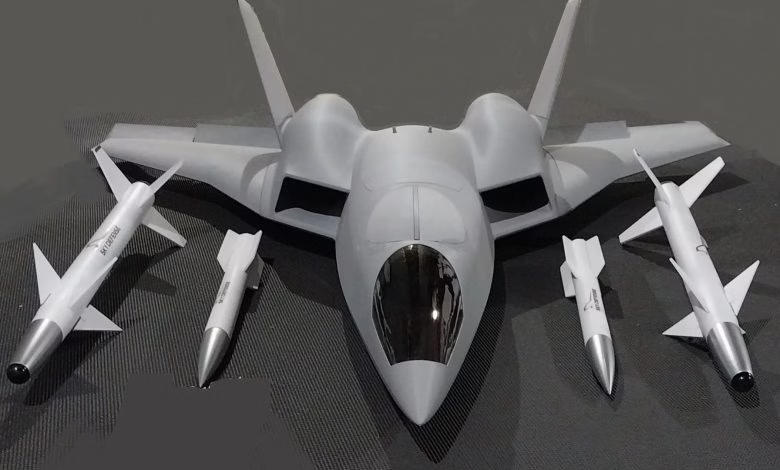
On July 8, 2026, it was reported that SkyDefense, a Colorado-based defense company, announced the latest progress on its CobraJet VTOL (Vertical Take-Off and Landing) counter-UAS interceptor. Featuring a modular design built around a 3D-printed carbon fiber "core," the platform has spawned five variants—ranging from the V4 to the VT10—covering a full mission spectrum that extends from light interception to heavy "mothership" roles. The company plans to conduct field tests in the fourth quarter of 2026 and commence production in the first quarter of 2027. CobraJet is designed to counter unmanned aircraft systems (UAS) that threaten critical infrastructure, borders, airports, military installations, and public spaces. Combining vertical take-off and landing (VTOL) capabilities with thrust-vectoring nozzles, the aircraft—according to SkyDefense—possesses exceptional maneuverability, enabling it to intercept multiple high-speed, highly maneuverable drones using onboard air-to-air weaponry. Nick Verini, President of SkyDefense, stated: "Our CobraJet airborne munitions are essentially low-cost, expendable air-to-air drone interceptors. They can be mass-produced at a rate of thousands per month using 3D printing and other highly efficient workflows, without compromising quality." Verini’s remarks reveal an approach that differs from traditional defense industry practices; while the CobraJet itself serves as a reusable interception platform, its airborne munitions are designed as low-cost, expendable items. Leveraging 3D printing, these munitions can be manufactured in large batches—thousands per month—enabling rapid, low-cost replenishment at scale. Since its official unveiling in 2025, the CobraJet has drawn attention for two key reasons. First, it utilizes a modular 3D-printed carbon-fiber airframe; a single core structure can spawn five different variants simply by swapping out wings, propulsion systems, or weaponry, eliminating the need for a complete airframe redesign. Second, it is poised to enter mass production in the first quarter of 2027, demonstrating that the project has moved well beyond the conceptual stage.