
Industry News
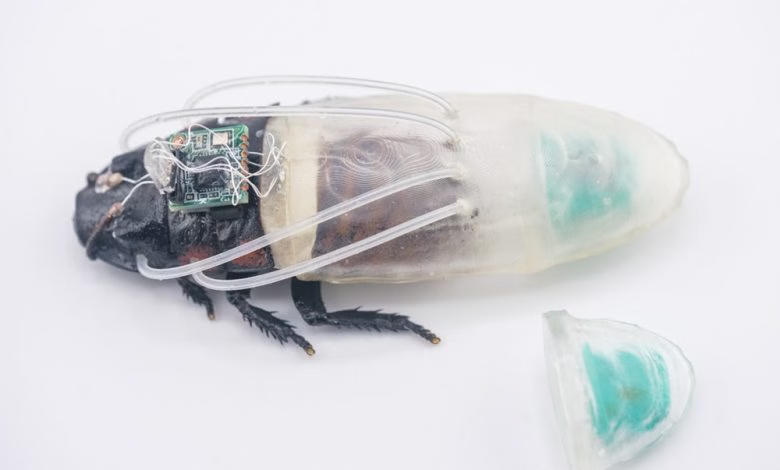
A 3D-printed protective shell for a robotic cockroach, designed for disaster relief.
Robo-cockroach dons 3D-printed diving suit: 3-hour underwater endurance; already deployed in the field during the Myanmar earthquake.
News Content
On July 7, 2026, Nanji Xiong learned that a joint research team from Nanyang Technological University (Singapore) and Waseda University had developed a 3D-printed diving suit that enables a mechanical cockroach—equipped with an electronic controller—to carry out underwater missions. The suit features an integrated oxygen-generating device capable of continuously supplying oxygen to the cockroach's respiratory system for up to three hours. In the aftermath of heavy rains or floods, disaster zones are often inundated, with drainage ditches and culverts beneath the debris completely submerged. Without waterproofing, the robotic insects are restricted to traversing dry land. Consequently, Nanyang Technological University shifted its research focus toward enabling these robots to operate underwater—a requirement that drove the project to develop 3D-printed diving suits. This protective suit designed for robotic cockroaches consists of a 3D-printed oxygen-generating canister, a silicone oxygen-supply tube, and a flexible shell. The oxygen-generating canister is 3D-printed from transparent PMMA resin and contains a sponge impregnated with manganese dioxide; when this comes into contact with diluted hydrogen peroxide, the manganese dioxide acts as a catalyst to produce oxygen. The oxygen generated by the reaction between the manganese dioxide and hydrogen peroxide is then delivered to the cockroach's respiratory system via the silicone tube. Professor Hirotaka Sato has over a decade of research experience in the field of bio-inspired insect robotics. Following a powerful earthquake in Myanmar this March, the robotic cockroaches he developed were deployed—as part of "Operation Lionheart"—to search for survivors amidst the rubble, marking the technology's first real-world application. Currently, the research team is testing a "diving suit" version in simulated disaster environments, with plans to finalize adjustments and improvements before official deployment. Underwater capabilities open up a whole new range of applications, such as inspecting damp and hard-to-access pipes, drains, tunnels, and infrastructure. Meanwhile, the team is also exploring the adaptation of this technology to other insect species, such as locusts and beetles.